Monday, November 29, 2021

밀양출장안마: Get in touch with its many benefits


Massage: Get in touch with its many benefits

A soothing massage can help you unwind, but that's not all. Explore the possible benefits of massage and what to expect. By Mayo Clinic Staff

Massage is no longer available only through luxury spas and upscale health clubs. Today, massage therapy is offered in businesses, clinics, hospitals and even airports. If you've never tried massage, learn about its possible health benefits and what to expect during a massage therapy session.

What is massage?

Massage is a general term for pressing, rubbing and manipulating your skin, muscles, tendons and ligaments. Massage therapists typically use their hands and fingers for massage, but may also use their forearms, elbows and even feet. Massage may range from light stroking to deep pressure.

There are many different types of massage, including these common types:

  • Swedish massage. This is a gentle form of massage that uses long strokes, kneading, deep circular movements, vibration and tapping to help relax and energize you.
  • Deep massage. This massage technique uses slower, more-forceful strokes to target the deeper layers of muscle and connective tissue, commonly to help with muscle damage from injuries.
  • Sports massage. This is similar to Swedish massage, but it's geared toward people involved in sport activities to help prevent or treat injuries.
  • Trigger point massage. This massage focuses on areas of tight muscle fibers that can form in your muscles after injuries or overuse.

Benefits of massage

Massage is generally considered part of complementary and alternative medicine. It's increasingly being offered along with standard treatment for a wide range of medical conditions and situations.

Studies of the benefits of massage demonstrate that it is an effective treatment for reducing stress, pain and muscle tension.

While more research is needed to confirm the benefits of massage, some studies have found massage may also be helpful for:

  • Anxiety
  • Digestive disorders
  • Fibromyalgia
  • Headaches
  • Insomnia related to stress
  • Myofascial pain syndrome
  • Paresthesias and nerve pain
  • Soft tissue strains or injuries
  • Sports injuries
  • Temporomandibular joint pain

Beyond the benefits for specific conditions or diseases, some people enjoy massage because it often involves caring, comfort, a sense of empowerment and creating deep connections with their massage therapist.

Despite its benefits, massage isn't meant as a replacement for regular medical care. Let your doctor know you're trying massage and be sure to follow any standard treatment plans you have.

Risks of massage

Most people can benefit from massage. However, massage may not be appropriate if you have:

  • Bleeding disorders or take blood-thinning medication
  • Burns, open or healing wounds
  • Deep vein thrombosis
  • Fractures
  • Severe osteoporosis
  • Severe thrombocytopenia

Discuss the pros and cons of massage with your doctor, especially if you are pregnant or have cancer or unexplained pain.

Some forms of massage can leave you feeling a bit sore the next day. But massage shouldn't ordinarily be painful or uncomfortable. If any part of your massage doesn't feel right or is painful, speak up right away. Most serious problems come from too much pressure during massage.

In rare circumstances, massage can cause:

  • Internal bleeding
  • Nerve damage
  • Temporary paralysis
  • Allergic reactions to massage oils or lotions

What you can expect during a massage

You don't need any special preparation for massage. Before a massage therapy session starts, your massage therapist should ask you about any symptoms, your medical history and what you're hoping to get out of massage. Your massage therapist should explain the kind of massage and techniques he or she will use.

In a typical massage therapy session, you undress or wear loosefitting clothing. Undress only to the point that you're comfortable. You generally lie on a table and cover yourself with a sheet. You can also have a massage while sitting in a chair, fully clothed. Your massage therapist should perform an evaluation through touch to locate painful or tense areas and to determine how much pressure to apply.

Depending on preference, your massage therapist may use oil or lotion to reduce friction on your skin. Tell your massage therapist if you might be allergic to any ingredients.

A massage session may last from 15 to 90 minutes, depending on the type of massage and how much time you have. No matter what kind of massage you choose, you should feel calm and relaxed during and after your massage.

If a massage therapist is pushing too hard, ask for lighter pressure. Occasionally you may have a sensitive spot in a muscle that feels like a knot. It's likely to be uncomfortable while your massage therapist works it out. But if it becomes painful, speak up.

Finding a massage therapist

Massage can be performed by several types of health care professionals, such as a physical therapist, occupational therapist or massage therapist. Ask your doctor or someone else you trust for a recommendation. Most states regulate massage therapists through licensing, registration or certification requirements.

Don't be afraid to ask a potential massage therapist such questions as:

  • Are you licensed, certified or registered?
  • What is your training and experience?
  • How many massage therapy sessions do you think I'll need?
  • What's the cost, and is it covered by health insurance?

The take-home message about massage

Brush aside any thoughts that massage is only a feel-good way to indulge or pamper yourself. To the contrary, massage can be a powerful tool to help you take charge of your health and well-being, whether you have a specific health condition or are just looking for another stress reliever. You can even learn how to do self-massage or to engage in massage with a partner at home.


Benefits of Physical Activity


거제출장안마

Weight Management

Looking to get to or stay at a healthy weight? Both diet and physical activity play a critical role in maintaining a healthy body weight, losing excess body weight, or maintaining successful weight loss. You gain weight when you consume more calories through eating and drinking than the amount of calories you burn, including those burned during physical activity. It’s important to balance calories. When it comes to weight management, people vary greatly in how much physical activity they need. You may need to be more active than others to reach or maintain a healthy weight.

To maintain your weight: Work your way up to 150 minutes a week of moderate-intensity aerobic activity (for example, 30 minutes a day, 5 days a week). Strong scientific evidence shows that physical activity can help you maintain your weight over time. However, the exact amount of physical activity needed to do this is not clear since it varies greatly from person to person. It’s possible that you may need to do more than 150 minutes of moderate-intensity activity a week to maintain your weight.

To lose weight and keep it off: You will need a high amount of physical activity unless you also adjust your diet and reduce the amount of calories you’re eating and drinking. Getting to and staying at a healthy weight requires both regular physical activity and a healthy eating plan. For more information about nutrition, physical activity, and weight loss.


Reduce Your Health Risk

Cardiovascular Disease

Heart disease and stroke are two of the leading causes of death in the United States. Following the recommendations and getting at least 150 minutes a week of moderate-intensity aerobic activity can put you at a lower risk for these diseases. You can reduce your risk even further with more physical activity. Regular physical activity can also lower your blood pressure and improve your cholesterol levels.

Type 2 Diabetes and Metabolic Syndrome

Regular physical activity can reduce your risk of developing type 2 diabetes and metabolic syndrome. Metabolic syndrome is some combination of too much fat around the waist, high blood pressure, low High Density Lipoproteins (HDL) cholesterol, high triglycerides, or high blood sugar. People start to see benefits at levels of physical activity below the recommended 150 minutes a week. Additional amounts of physical activity seem to lower risk even more.

Some Cancers

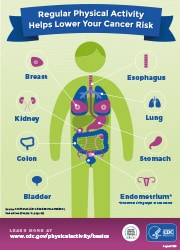
Being physically active lowers your risk for developing several commonly occurring cancers. Research shows that adults who participate in greater amounts of physical activity have reduced risks of developing cancers of the:

  • Bladder
  • Breast
  • Colon (proximal and distal)
  • Endometrium
  • Esophagus (adenocarcinoma)
  • Kidney
  • Lung
  • Stomach (cardia and non-cardia adenocarcinoma)

Improve your quality of life. If you are a cancer survivor, research shows that getting regular physical activity not only helps give you a better quality of life, but also improves your physical fitness.

Strengthen Your Bones and Muscles

As you age, it’s important to protect your bones, joints, and muscles – they support your body and help you move. Keeping bones, joints, and muscles healthy can help ensure that you’re able to do your daily activities and be physically active. Doing aerobic, muscle-strengthening, and bone-strengthening physical activity at a moderately-intense level can slow the loss of bone density that comes with age.

Hip fracture is a serious health condition that can have life-changing negative effects, especially if you’re an older adult. Physically active people have a lower risk of hip fracture than inactive people.

Among older adults, physical activity also reduces the risk of falling and injuries from falls. Physical activity programs that include more than one type of physical activity are most successful at reducing falls and fall-related injuries. Different types of physical activity include aerobic, muscle strengthening, and balance physical activities. Also, weight bearing activities such as running, brisk walking, jumping jacks and strength training produce a force on the bones. These activities that can help promote bone growth and bone strength and reduce the risk of fall-related injuries and fractures.

Regular physical activity helps with arthritis and other rheumatic conditions affecting the joints. Doing 150 minutes a week of moderate-intensity aerobic physical activity, if able, plus muscle-strengthening activity improves your ability to manage pain and do everyday tasks and improves quality of life.

Build strong, healthy muscles. Muscle-strengthening activities like lifting weights can help you increase or maintain your muscle mass and strength. This is important for older adults who experience reduced muscle mass and muscle strength with aging. Slowly increasing the amount of weight and number of repetitions you do as part of muscle strengthening activities will give you even more benefits, no matter your age.

Improve Your Ability to do Daily Activities and Prevent Falls

A functional limitation is a loss of the ability to do everyday activities such as climbing stairs, grocery shopping, or playing with your grandchildren.

How does this relate to physical activity? If you’re a physically active middle-aged or older adult, you have a lower risk of functional limitations than people who are inactive.

Improve physical function and decrease the risk of falls. For older adults, multicomponent physical activity is important to improve physical function and decrease the risk of falls or injury from a fall. Multicomponent physical activity is physical activity that includes more than one type of physical activity, such as aerobic, muscle strengthening, and balance training. Multicomponent physical activity can be done at home or in a community setting as part of a structured program.

Increase Your Chances of Living Longer

Science shows that physical activity can reduce your risk of dying early from leading causes of death, like heart disease and some cancers. This is remarkable in two ways:

  1. Only a few lifestyle choices have as large an impact on your health as physical activity. People who are physically active for about 150 minutes a week have a 33% lower risk of all-cause mortality than those who are physically inactive.
  2. You don’t have to do high amounts of activity or vigorous-intensity activity to reduce your risk of premature death. Benefits start to accumulate with any amount of moderate- or vigorous-intensity physical activity.
Regular Physical Activity Helps Lower Your Cancer Risk

Learn more about Physical Activity and Cancer

Benefits of Regular Physical Activity


Have you ever started a fitness program and then quit? If you answered yes, you’re not alone. Many people start fitness programs but stop when they get bored or results come too slowly. Here are seven tips to help you stay motivated.

1. Set goals 

Start with simple goals and then progress to longer range goals. Remember to make your goals realistic and achievable. It’s easy to get frustrated and give up if your goals are too ambitious. For example, if you haven’t exercised in a while, a short-term goal might be to walk 10 minutes a day three days a week. An intermediate goal might be to walk 30 minutes five days a week. A long-term goal might be to complete a 5K walk.

2. Make it fun 

Find sports or activities that you enjoy, then vary the routine to keep you on your toes. If you’re not enjoying your workouts, try something different. Join a volleyball or softball league. Take a ballroom dancing class. Check out a health club or martial arts center. Discover your hidden athletic talent. Remember, exercise doesn’t have to be drudgery — and you’re more likely to stick with a fitness program if you’re having fun.

3. Make physical activity  

If it’s hard to find time for exercise, don’t fall back on excuses. Schedule workouts as you would any other important activity. You can also slip in physical activity throughout the day. Take the stairs instead of the elevator. Walk up and down sidelines while watching the kids play sports. Pedal a stationary bike or do strength training exercises while you watch TV at night.

4. Put it on paper 

Are you hoping to lose weight? Boost your energy? Sleep better? Manage a chronic condition? Write it down. Seeing the benefits of regular exercise on paper may help you stay motivated. You may also find it helps to keep an exercise diary. Record what you did during each exercise session, how long you exercised and how you felt afterward. Recording your efforts can help you work toward your goals — and remind you that you’re making progress.

5. Join forces with friends 

You’re not in this alone. Invite friends or co-workers to join you when you exercise. Work out with your partner or other loved ones. Play soccer with your kids. Organize a group of neighbors to take fitness classes at a local health club.

6. Reward yourself 

After each exercise session, take a few minutes to savor the good feelings that exercise gives you. This type of internal reward can help you make a long-term commitment to regular exercise. External rewards can help, too. When you reach a longer range goal, treat yourself to a new pair of walking shoes or new tunes to enjoy while you exercise.

7. Be flexible 

If you’re too busy to work out or simply don’t feel up to it, take a day or two off. Be gentle with yourself if you need a break. The important thing is to get back on track as soon as you can. Now that you’ve regained your enthusiasm, get moving! Set your goals, make it fun and pat yourself on the back from time to time. Remember, physical activity is for life. Review these tips whenever you feel your motivation slipping.

Tuesday, November 9, 2021

KEEP IT MOVING: THE UNEXPECTED BENEFITS OF REGULAR PHYSICAL ACTIVIT


When your alarm sounds at 5 a.m or when you’re exhausted after a full day of work and errands, it can be tempting to skip the gym to sneak in a few more minutes of rest. When you’re in the middle of a tough workout, feeling the burn and begging your personal trainer to let you quit, it’s easy to feel like you’d rather be doing just about anywhere else. Regular exercise isn’t easy, but remember: Nothing that’s worth it ever is.


Whether you realize it or not — and regardless of what your head says — you’re body is silently thanking you for each workout you complete. Exercise has powerful physical health effects (this you likely know), but what many people aren’t aware of is that regular physical activity also offers unexpected benefits for the mind, too.


Let’s take a look at how one sweaty hour a day can make a big difference in not only your physical health but your mental health, too.

BEING PHYSICALLY FIT HELPS BOOST CONFIDENCE

You already know eating healthy and exercising regularly can stimulate profound changes in your physical appearance. And while changing your appearance may be the initial reason you decided to start working out, the changes you’ll experience are more than skin deep.


Using your body, strengthening it, feeding it well, and watching it transform can have remarkable effects on your self-esteem and self-confidence. Plus, the relationships you develop in a group-oriented gym setting can also go a long way toward helping you build a positive self-image.


Taking the time to take care of your body can help remind you of just how remarkable you really are — both inside and out.


EXERCISE BOOSTS THE BRAIN’S HAPPY CHEMICALS

Happy might not describe your mood in the middle of a tough sweat session, but wait until you’re done — you might just be surprised at how great you really feel. That’s because exercise boosts the release of “happy” chemicals in your brain like serotonin, dopamine, and endorphins.


These chemicals trigger feelings of euphoria, contentment, and accomplishment — researchers have found this is true even in people who suffer from major depression. In fact, one 2013 study found that there was no difference in efficacy between prescribed anti-depressants and a bout of intense exercise.


For many people, the emotional payoff of exercise is so profound, it becomes habit-forming. If you’re looking to benefit from the feel-good effects of regular exercise, getting involved with a group-oriented gym can be tremendously helpful. Whether you’re participating in group exercise classes or working one-on-one with a personal trainer, you’ll get accountability, which is absolutely essential for maintaining a regular fitness habit.


ROUTINE PHYSICAL ACTIVITY HELPS PROTECT AGAINST COGNITIVE DECLINE

Have you ever walked into a room to grab something and suddenly forgot why on earth you went in there? We’ve probably all been there at least a few times. While we tend to joke about this kind of stuff, cognitive decline is a very real phenomenon that occurs as we age.


Though you may not have any real symptoms now, as your brain ages (beyond the age of 45), it becomes less efficient at processing and recalling information. Exercise isn’t a cure for cognitive decline, but because it boosts brain chemicals that prevent degeneration, it can absolutely help keep your brain sharp as it ages.


Hitting the gym today might just help you dominate your sudoku game in 30-40 years.


EXERCISE CAN HELP ALLEVIATE ANXIETY

If you struggle with anxiety, whether it’s chronic or the result of a stressful life situation, it can very debilitating. Excessive worrying, fatigue, emotional volatility, restlessness, insomnia — the mental and emotional difficulties that arise from a bout of anxiety can make you feel like you don’t even want to leave the house.


While hitting the gym might be the last thing on your mind when you’re dealing with anxiety, getting a good workout in can help soothe your symptoms. Exercise stimulates your brain to release a cascade of feel-good chemicals, including:


●        Endorphins

●        Dopamine

●        GABA and BDNF

●        Endogenous cannabinoids

●        Serotonin

●        Norepinephrine


Because these chemicals and hormones help regulate your emotional response, exercise can actually help soothe acute anxiety symptoms. And when you make physical activity a priority in your daily routine, it can also reduce the severity of chronic anxiety and even prevent it from coming back. Studies have even found that in many individuals, moderate- to high-intensity exercise can improve anxiety symptoms better than many conventional therapies, including psychotherapy.


If you feel anxiety about going to the gym — whether it’s because you’ve never been or you don’t feel comfortable working out alone — consider hiring a personal trainer! You’ll get personalized nutrition coaching, an exercise routine designed around your unique needs, and perhaps most importantly, accountability that will push you to reach your goals.


READY TO CHANGE YOUR LIFE? GET A FREE PERSONAL TRAINING CONSULTATION TODAY

If you’re ready to experience the profound physical and mental health benefits of regular exercise, our personal trainers at Envision Fitness are ready to help you get there. Whether you’re looking for one-on-one personal training, group fitness classes, athletic training, weight loss classes, or nutrition coaching, we’ve got you covered.


The Importance of Physical Fitness


서울출장안마

To put it simply, physical activity and exercise is important for everyone. Children, adolescents, and adults of all ages need regular physical activity. Physical activity promotes good health, and you should stay active throughout all stages of your life regardless of your body type or BMI.

Understanding the benefits of physical fitness and knowing how active you should be can help you maintain good health and improve your overall quality of life. Here are a few benefits of regular physical activity that demonstrate the importance of physical fitness.

Save money

According to the Centers for Disease Control and Prevention, chronic diseases cause 7 out of 10 deaths in the U.S., and treating chronic diseases accounts for 86% of U.S. healthcare costs. While some diseases cannot be prevented, you can reduce your risk for certain disease – such as heart disease and diabetes – through reducing risky behaviors and living a healthy lifestyle.

Making healthy choices, such as engaging in regular physical activity, can reduce your risk for many health issues and complications that can result in expensive medical care.

Increase your life expectancy

Numerous studies have shown that regular physical activity increases life expectancy and reduces the risk of premature mortality. There’s not a magic formula that translates hours of physical activity into hours of life gained, but research suggests that people who are more active tend to be healthier and tend to live longer.

Reduce your risk of injury

Regular exercise and physical activity increase muscle strength, bone density, flexibility, and stability. Physical fitness can reduce your risk for and resilience to accidental injuries, especially as you get older. For example, stronger muscles and better balance mean that you’re less likely to slip and fall, and stronger bones mean that your less likely to suffer bone injuries should you take a tumble.

Improve your quality of life

A sedentary lifestyle and a lack of physical activity can take a toll on a person’s body. Physical inactivity is associated with an increased risk for certain types of cancer, numerous chronic diseases, and mental health issues. Exercise, however, has been shown to improve mood and mental health, and provides numerous health benefits. Of course physical fitness also allows you to do things that you may not otherwise be able to do.

Stay active

Staying active and healthy allows you to do activities that require a certain level of physical fitness. For example, hiking to the top of a mountain is a rewarding experience that instills a sense of accomplishment and provides spectacular scenery, but there are people who cannot experience this due to fitness limitations.

But even walking around the zoo with your family or playing on the playground with your children can be challenging for those who neglect physical activity for extended periods of time. Being active means that it’s easier to stay active as you get older.

Improve your health

There are numerous health advantages to physical fitness. Regular exercise and physical activity promotes strong muscles and bones. It improves respiratory, cardiovascular health, and overall health. Staying active can also help you maintain a healthy weight, reduce your risk for type 2 diabetes, heart disease, and reduce your risk for some cancers.

In other words, staying active is a crucial part of maintaining good health and wellness.

Benefits of children being active


강남출장안마

Physical activity is important for everyone. Not only can it reduce the risk of some diseases, including type 2 diabetes and high blood pressure, but it keeps our bodies at a healthy weight and benefits our mental health as well. When we exercise, our breathing increases and our heart starts pumping more oxygen-filled blood to our muscles. The increased blood flow also benefits our brain, allowing it to almost immediately function better. As a result, we tend to be more focused after exercise of any kind. Therefore, exercise is one of the best prevention and treatment strategies for depression. Physical exercise actually changes the level of serotonin in the brain by increasing the levels of the “feel good” hormones, or endorphins. Endorphins are well-known for their role in mood control.

There are many reasons why exercise is important for children. According to the American Council on Exercise, the obesity epidemic among children ages 6-19 has reached 15 percent, almost quadruple what it was in the late 1960s. By spending extra time on the playground or participating in a sport, children reap the same benefits resulting in more focus at school and better outlook on relationships and school overall. Physical activity will prevent youth from becoming obese or help them lose weight, as well as teach them healthy habits that can last a lifetime.

The American Council on Exercise lists the following top 10 reasons kids should get plenty of exercise:

  1. Kids who exercise are more likely to keep exercising as an adult.
  2. Exercise helps kids achieve and maintain a healthy body weight.
  3. Regular physical activity helps build and maintain strong, healthy muscles, bones and joints.
  4. Exercise aids in the development of important interpersonal skills—this is especially true for participation in team sports.
  5. Exercise improves the quantity and quality of sleep.
  6. Research shows exercise promotes improved school attendance and enhances academic performance.
  7. Kids who exercise have greater self-esteem and better self-images.
  8. Participating in regular physical activity prevents or delays the development of many chronic diseases (e.g., heart disease, diabetes, obesity, hypertension) and promotes health.
  9. Children who are active report fewer symptoms of anxiety and depression and a better overall mood.
  10. Exercise helps improve motor coordination and enhances the development of various motor performance skills.

Kids runningThe Center for Disease Control and Prevention recommends children get 60 or more minutes of appropriate physical activity each day. There are three different types of physical activity they should receive on a daily basis.

  1. Aerobic activity: Riding a scooter, bike or going for a brisk walk.
  2. Muscle strengthening: Gymnastics or playing on the jungle gym.
  3. Bone strengthening: Jumping rope, running or playing soccer.

Make sure the physical activity is age-appropriate, enjoyable and offers variety. Appropriate play refers to activities suitable for young children. They do not need to lift weights in a gym because they are strengthening their muscles when they climb a tree or jungle gym.


Food as Fuel Before, During and After Workouts


Your body is your vehicle, so you have to keep your engine running when you work out. That means fueling up your body by eating the right foods and drinking the right fluids, in the right amounts at the right times.

The American College of Sports Medicine says, “Adequate food and fluid should be consumed before, during, and after exercise to help maintain blood glucose concentration during exercise, maximize exercise performance, and improve recovery time. Athletes should be well hydrated before exercise and drink enough fluid during and after exercise to balance fluid losses.”

“You don’t have to adhere to a rigid schedule and there are no hard-fast rules,” said Riska Platt, M.S., R.D., a nutrition consultant for the Cardiac Rehabilitation Center at Mount Sinai Medical Center in New York. “But there are some things you should do before, during and after you work out.”

Here is what Ms. Platt recommends:

Before: Fuel Up!

Not fueling up before you work out is like “driving a car on empty,” said Platt, an American Heart Association volunteer. You also won’t have enough energy to maximize your workout and you limit your ability to burn calories. 

Ideally, fuel up two hours before you exercise by:

  • Hydrating with water.
  • Eating healthy carbohydrates such as whole-grain cereals (with low-fat or skim milk), whole-wheat toast, low-fat or fat-free yogurt, whole grain pasta, brown rice, fruits and vegetables.
  • Avoiding saturated fats and even a lot of healthy protein — because these types of fuels digest slower in your stomach and take away oxygen and energy-delivering blood from your muscles. 

If you only have 5-10 minutes before you exercise, eat a piece of fruit such as an apple or banana.

“The key is to consume easily digested carbohydrates, so you don’t feel sluggish,” Platt said.

During: Make a Pit Stop.

Whether you’re a professional athlete who trains for several hours or you have a low to moderate routine, keep your body hydrated with small, frequent sips of water.

Platt notes that you don’t need to eat during a workout that’s an hour or less. But, for longer, high-intensity vigorous workouts, she recommends eating 50-100 calories every half hour of carbohydrates such as low-fat yogurt, raisins, or banana.

After: Refuel Your Tank.

After your workout, Ms. Platt recommends refueling with:

  • Fluids. Drink water, of course. Blend your water with 100% juice such as orange juice which provides fluids, carbohydrates.

  • Carbohydrates. You burn a lot of carbohydrates — the main fuel for your muscles — when you exercise. In the 20-60 minutes after your workout, your muscles can store carbohydrates and protein as energy and help in recovery.

  • Protein. Eat things with protein to help repair and grow your muscles.

It’s important to realize that these are general guidelines. We have different digestive systems and “a lot depends on what kind of workout you’re doing,” Platt said.

So do what works best for you. Know that what you put in your body (nutrition) is as important as you what you do with your body (exercise). Both are crucial to keeping your engine performing at its best.


밀양출장안마: Get in touch with its many benefits

밀양출장안마 Massage: Get in touch with its many benefits A soothing massage can help you unwind, but that's not all. Explore the possible ben...